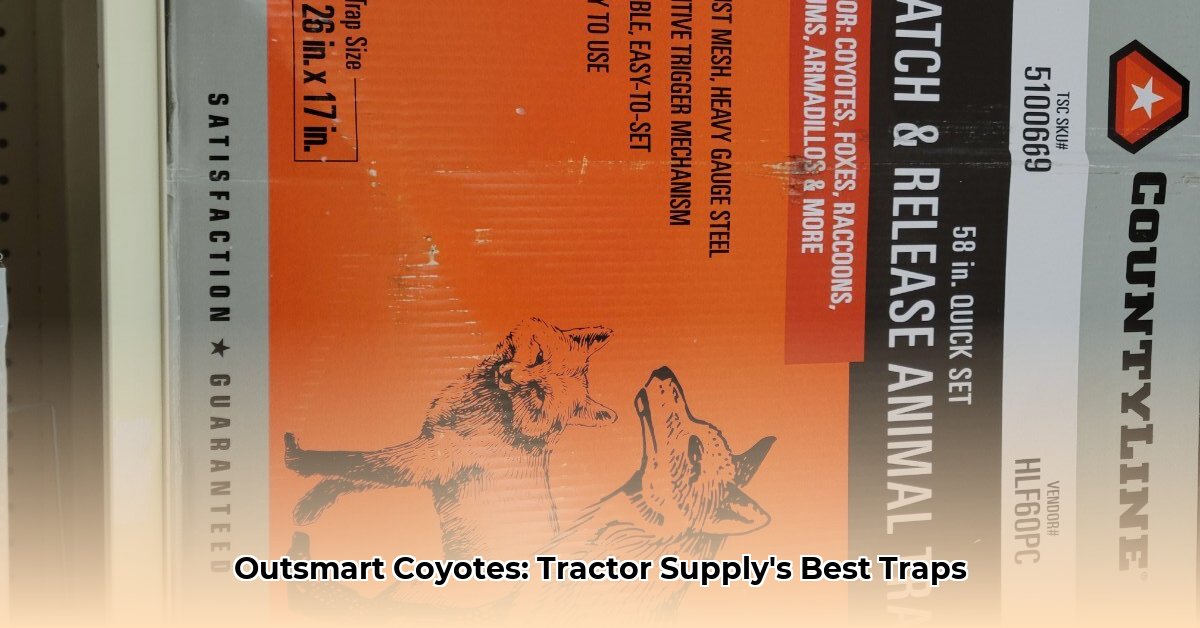
Dealing with coyotes is a significant challenge for farmers aiming for sustainable practices. While coyote traps are available at Tractor Supply and other retailers, responsible coyote management goes beyond simply purchasing a trap. For more information on potentially harmful methods, see this resource. This article explores effective, ethical strategies for coyote control, emphasizing a holistic approach that prioritizes both farm protection and environmental sustainability.
Understanding the Need for Coyote Management
Coyotes pose a substantial threat to livestock and crops, resulting in economic losses for farmers. The instinct to eradicate coyotes might seem immediate, but sustainable farming demands a more nuanced approach. Simply trapping every coyote isn't necessarily the most effective or ethical solution. A sustainable solution requires balancing the protection of your livelihood with the preservation of a healthy ecosystem.
Coyote Control Methods: Beyond Trapping at Tractor Supply
Traps, available at Tractor Supply and other farm supply stores, represent one element of coyote management. However, several critical factors must be considered before employing traps:
- Humane Considerations: Are the traps designed to minimize animal suffering?
- Specificity: Will the traps only target coyotes, or could non-target species be inadvertently caught?
- Ecosystem Impact: What is the broader ecological effect of trapping coyotes in the local environment?
Responsible trapping demands careful consideration of these factors. Successful coyote management frequently relies on a multi-pronged strategy. Trapping alone is rarely sufficient to address the problem comprehensively.
Integrated Pest Management (IPM): A Holistic Approach
Sustainable coyote management typically involves integrating multiple strategies for optimal effectiveness and minimizing ecological impact. This approach, known as Integrated Pest Management (IPM), often includes the following:
- Non-lethal Deterrents: Employing strong fences, livestock guarding animals (such as llamas or donkeys), noisemakers, or habitat modifications to discourage coyote presence.
- Habitat Management: Modifying the landscape to reduce coyote attractors. This could involve controlling vegetation or limiting readily accessible food sources.
- Understanding Predator-Prey Dynamics: Recognizing the natural balance within the ecosystem can contribute to effective population management without drastic measures.
This multifaceted strategy creates a more sustainable and robust solution than relying solely on traps.
Evaluating the Effectiveness, Ethics, and Costs of Coyote Control
The efficacy of coyote traps depends on several variables: the trap type, placement, and the local coyote population density. Prioritizing humane traps is crucial for ethical and responsible management. Minimizing animal suffering and preventing the accidental capture of non-target species are paramount.
The cost-effectiveness of different methods also needs careful consideration. While traps may have lower upfront costs, factors like time investment in setting and monitoring, potential property damage from mishandling, and the likelihood of needing supplemental methods must be considered. A thorough cost-benefit analysis is necessary before committing to a specific strategy.
The Future of Sustainable Coyote Management
Sustainable farming demands a continuous pursuit of effective and ethical coyote management practices. This involves ongoing learning, adaptation, and collaboration among farmers, wildlife experts, and other stakeholders. While traps from Tractor Supply might play a role in a comprehensive strategy, they are rarely a standalone solution. Open communication, knowledge sharing, and the incorporation of IPM principles are vital for long-term success in achieving a healthy balance between protecting livestock and preserving the environment.
Key Takeaways:
- Sustainable coyote management requires an ethical and integrated approach.
- Prioritize non-lethal methods whenever feasible.
- If trapping is necessary, ensure it is humane and compliant with regulations.
- Collaboration and knowledge sharing are paramount for success.
- Long-term ecological impacts should guide all management decisions.